

FORT SCOTT — When Kristi Banwart couldn't find the hair bows she wanted for her baby daughter in 2007, she started making them herself.
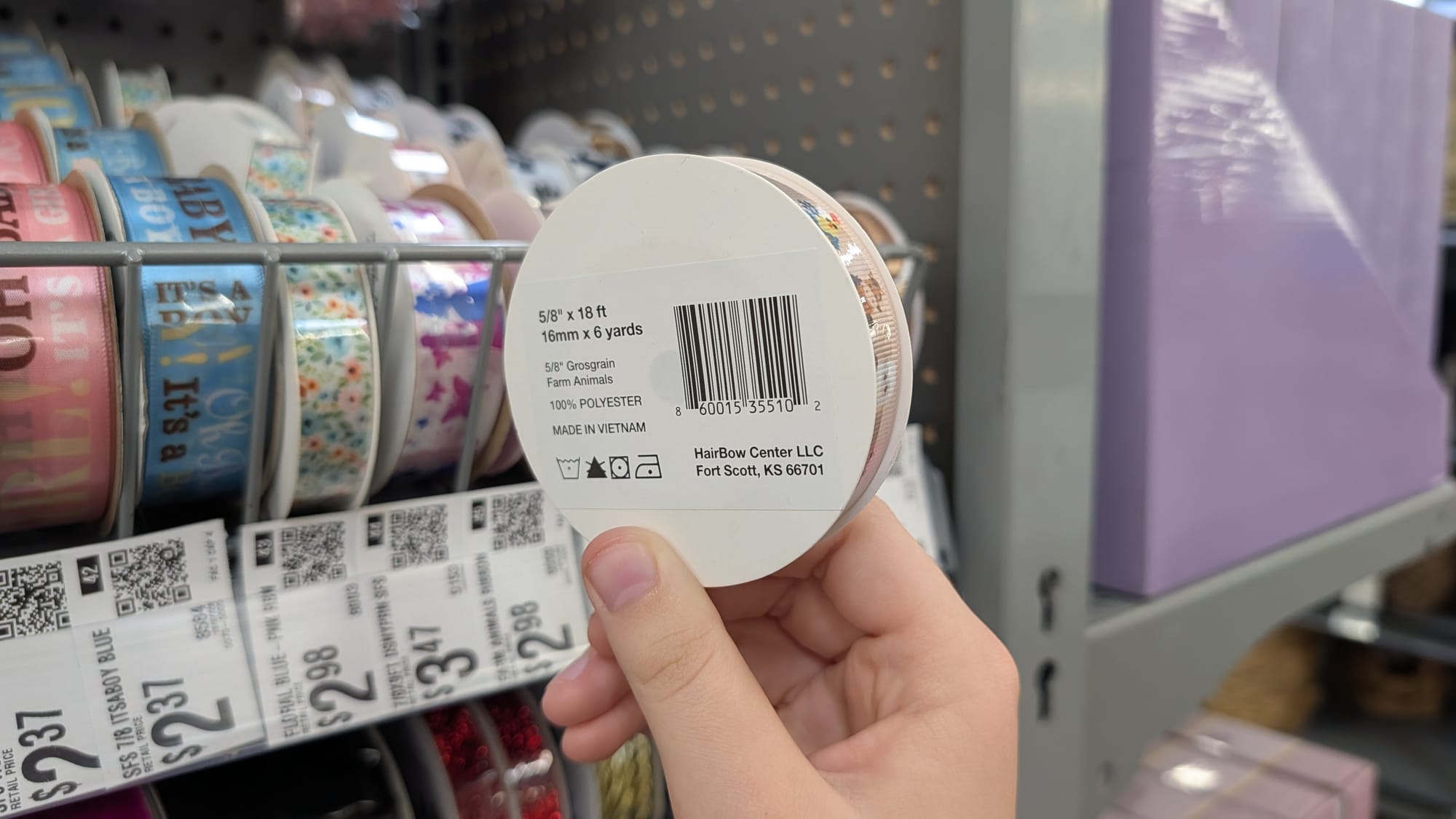
This fall, Hairbow Center, the business she and her husband, Trent, built from that hobby, put its ribbon on the shelves of more than 3,800 Walmart stores across the country.
The Fort Scott business has sold craft supplies online nationwide for nearly two decades, growing from an unfinished basement to a 20,500-square-foot warehouse outside of Fort Scott.
"It didn't really have a planned beginning per se," Kristi Banwart said in an interview with the Monitor.
Ribbons in the walls
When Noelle, the couple's third child, was born, Kristi said there was little available locally and online shopping meant eBay, so she bought ribbon from a California importer and made bows herself.
Her first attempt at selling was a booth at Good Ol' Days. A storm blew through, and Trent, then a corporate pilot, got a phone call at church.
"She said, 'Help,'" he said. "She was crying. She was like, 'Everything's blowing away. I need your help.'"
Kristi then started listing ribbon, headbands and hair clips on eBay instead. She later set up an online store using a service for work-at-home mothers that cost $7.99 a month.
"There was no paid advertising," she said. "It was all just completely organic."
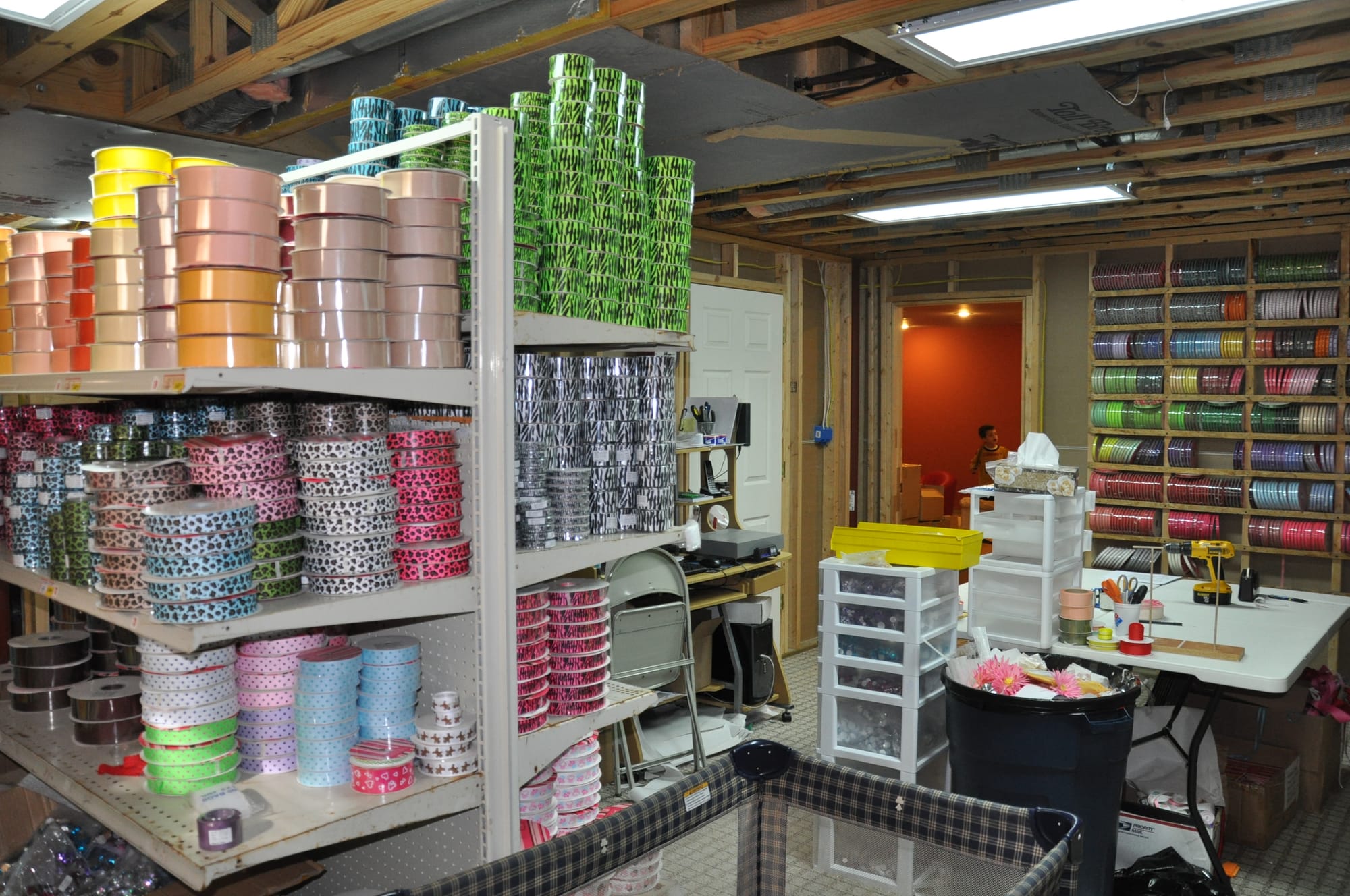
The inventory lived in the unfinished basement of their house. Kristi said she stacked ribbon reels in the open wall cavities where the drywall should have been. Orders were cut by hand from 100-yard reels, five yards at a time, rolled up with a wooden dowel chucked into a drill, taped and mailed.
"That was not real scalable," she said.
At first, Trent figured the business might eventually bring in enough money to cover a household bill.
"Maybe someday it could actually pay the mortgage," Trent recalled thinking at the time. "That'd be kind of cool."
$35,000 and a makeshift coal chute
Kristi hired her sister-in-law, the late Tina Banwart, to help a couple of hours a day, then her sister, Amber Lewis. When the cutting and rolling became unmanageable, she found a ribbon manufacturer in China online that the company still uses.
She wanted ribbon packaged on branded cardboard flanges, Trent Banwart said, so the company would "look like a professional company that we're not operating out of our basement."
Meeting the factory’s minimum order meant a sizable investment at a time when Trent was focused on paying off their mortgage early. As part of that plan, the couple had been steadily paying down a line of credit.
Kristi asked how much they had available on the line of credit, Trent said. It was around $35,000.
“She looks at me, she kind of smiles and she says, ‘Oh, good. That’s about exactly the amount we would need to place this first order,’” Trent said.
When the shipment arrived at the Kansas City airport, Trent borrowed a trailer to bring it home. On the drive back, he calculated how long it would take to sell all the ribbon.
"It was like 15 years," he said.
The boxes were too heavy to carry through the garage, so Trent removed a basement window and slid them down a 2-by-12 board "like a coal chute."
Within three or four months, they had to place an order more ribbon - far sooner than the 15 years Trent had estimated.
"It was insane," he said.
Trent’s brother, Ty Banwart, the company’s chief financial officer, said annual sales were about $40,000 when he joined. They rose to roughly $300,000 the following year and around $900,000 the year after that.
A warehouse with bedrooms
By late 2009, semitrailers were bringing shipments to the family's house, and the trucks were cracking the pavement on Ironwood Drive. Inventory had spilled into the garage. They needed more room.
The couple bought 48 acres in Bourbon County, intending to build a warehouse and eventually a new home. But rapid growth had also left them with a large tax bill, and Trent wasn't comfortable taking on both projects at once.
"I'm not a big enough risk taker," he said. "Let's build the building."
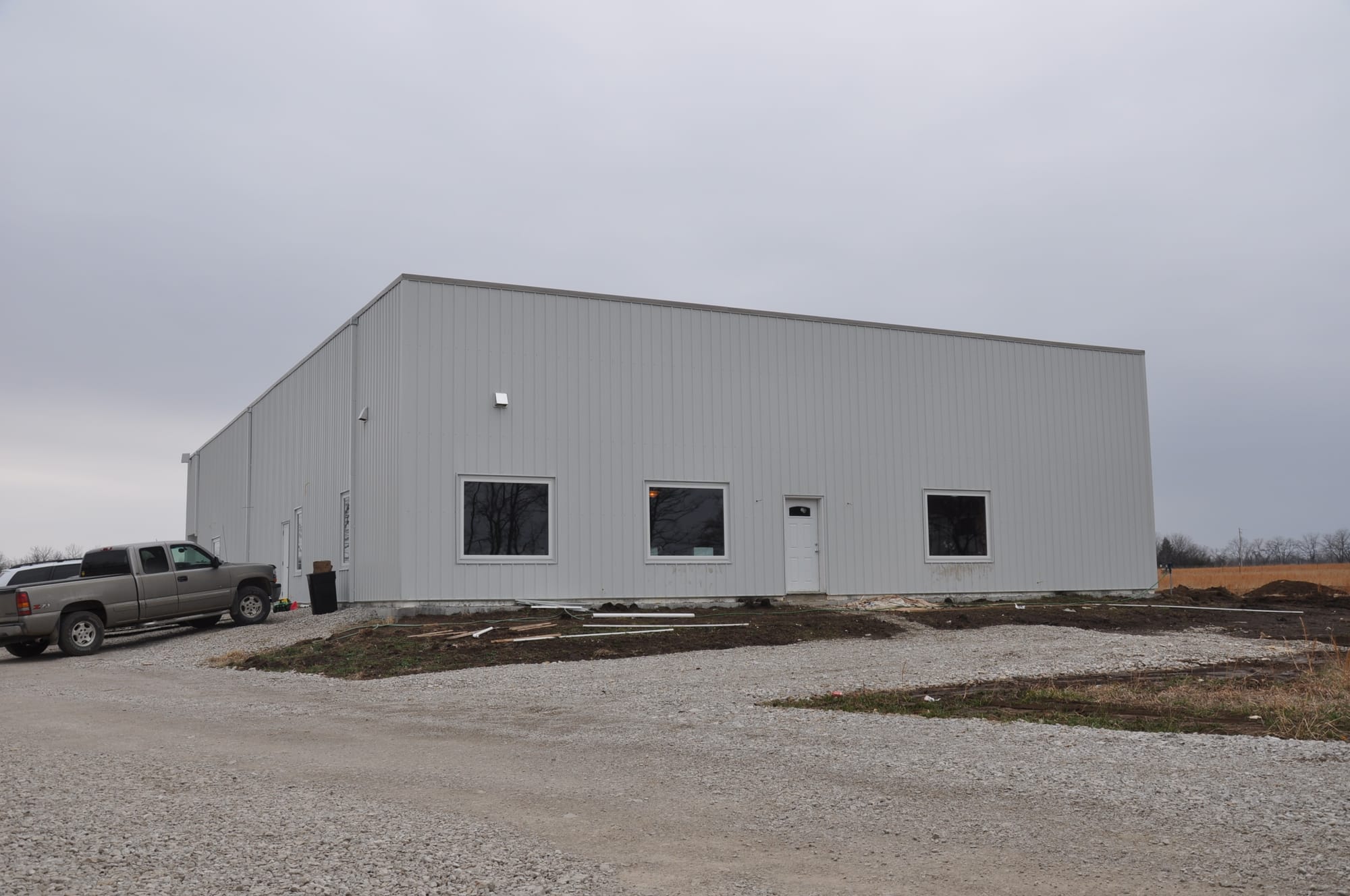
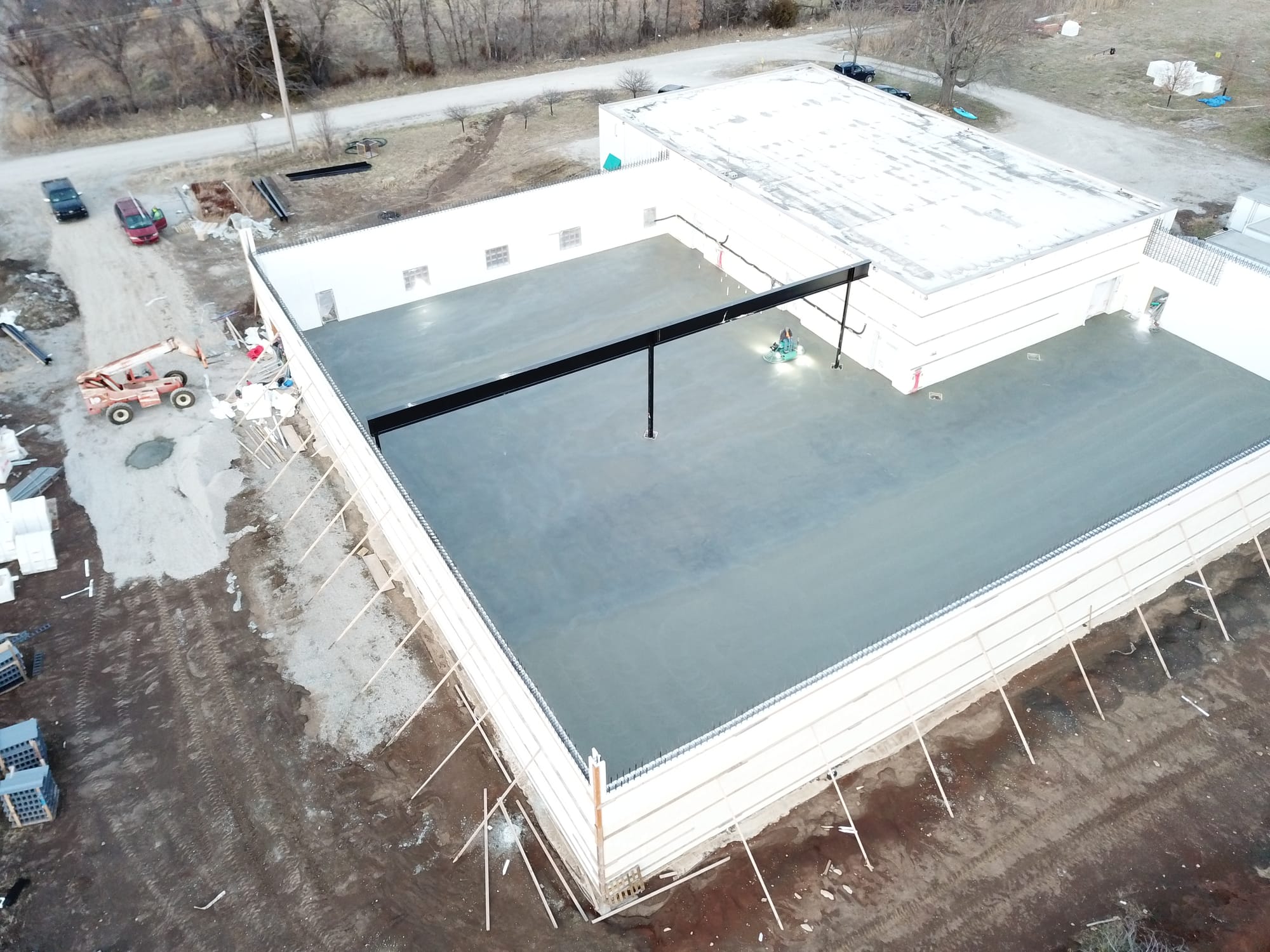
Instead, they designed the front of the warehouse as living space. Kristi, who had studied architecture at Kansas State University, drew the plans. Trent served as general contractor, and he and Ty helped build the insulated-concrete-form walls.
The family moved in during spring 2010. The three bedrooms later became offices, but the living room is still there.
The business kept growing. By 2020, the Banwarts were adding 14,000 square feet to their 6,500-square-foot building, a project Trent said cost about $700,000.
Then the COVID-19 pandemic began.
A product nobody wanted — until COVID
At the onset of the pandemic, Kristi said sales initially fell so sharply that the couple met with employees to discuss whether they might need to reduce hours rather than lay people off.
"Sales have almost completely stopped because nobody's making hair bows in COVID," she recalled telling them.
Around that time, shipping employee Beth Lawrence noticed something odd: Customers had started buying large quantities of elastic, a product the company had been trying to clear out.
"It was just a dead dog," Kristi Banwart said of its sales before the pandemic.
People were making face masks at home and needed elastic for the straps. Trent Banwart said orders went from a couple a month to hundreds a day. He spent months working with suppliers to get more.
The demand for elastic kept the business busy through the pandemic, allowing it to avoid layoffs and the need for government assistance such as Paycheck Protection Program loans, Trent said.
From online sales to Walmart shelves
Hairbow Center's website remains its largest sales outlet, followed by Amazon and Walmart's online marketplace, Trent said.
The move into Walmart stores began when a contact from its online marketplace called Trent about supplying the retailer's craft department. Walmart had lost a major ribbon supplier to bankruptcy, she told him, and was looking for companies that could help fill the gap.
Hairbow Center submitted products and prices, and Walmart started with four printed-ribbon products. Trent said becoming an in-store supplier took about six months, including working through thousands of pages of procedures. He used artificial intelligence tools to help navigate them.
"No one likes to give you an answer," he said. "They're always like, 'Refer to the handbook or refer to the procedure guide.' Well, they got like 10 of them."
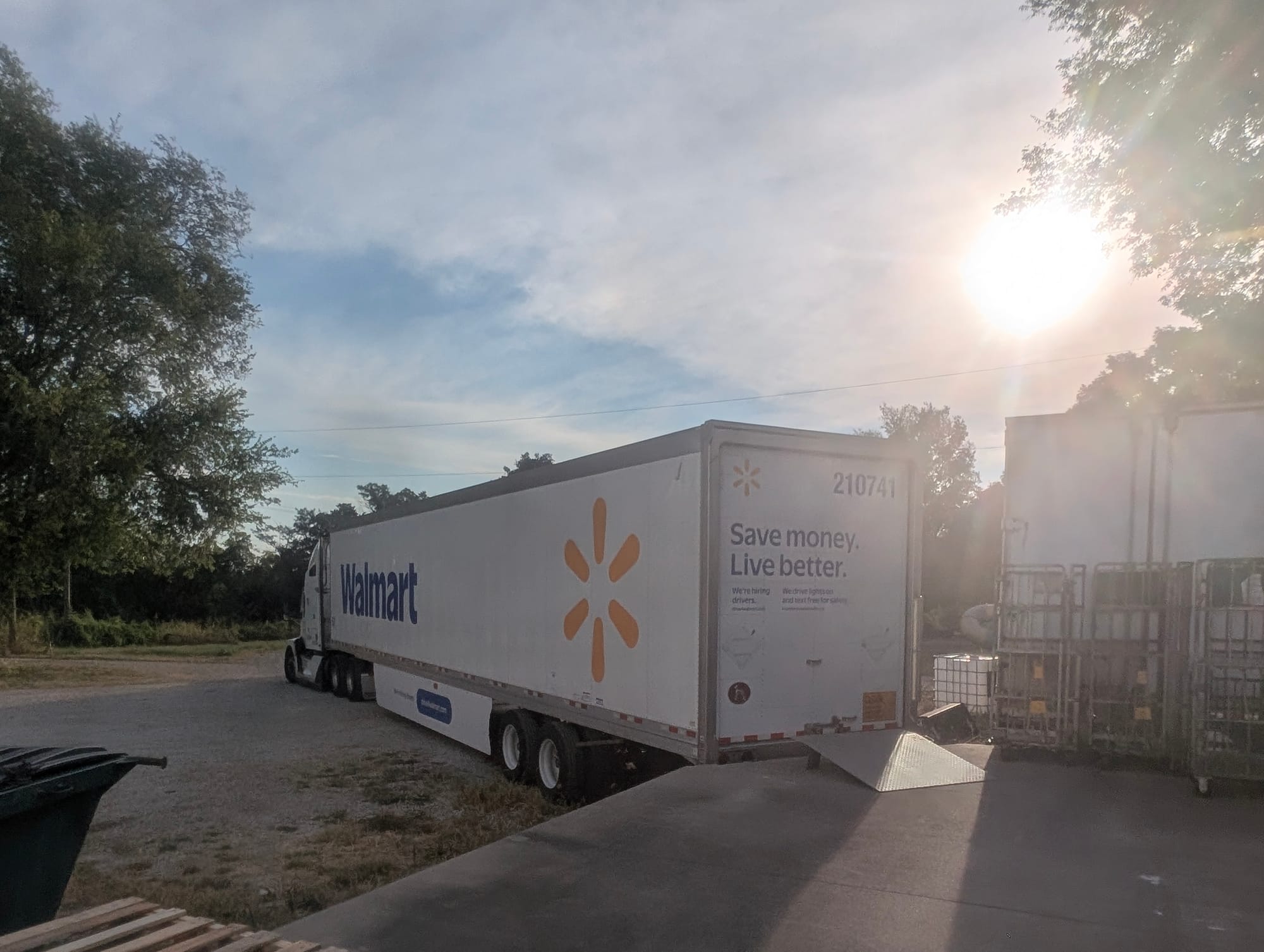
Walmart trucks picked up the first pallets from the warehouse in August. Three or four weeks later, the ribbon began appearing in stores, including Fort Scott's Walmart.
Trent said the products are carried in more than 3,800 Walmart stores. Kristi said the company's ribbon is stocked on a display rack used across the chain.
"They put us in every one," she said.
Walmart has asked the company to submit 10 more product ideas, and the Banwarts hope to expand the line. The move has also prompted the couple to consider other brick-and-mortar retailers, such as Michaels.
Hairbow Center now employs about nine full-time and four part-time workers, including two of the Banwarts' children, according to Ty Banwart.
Despite the move into stores, Trent said he expects online sales to remain the company's main business.
"We never thought about getting into stores because we grew up e-commerce," he said.
How many other stories like this are waiting to be told?
Hairbow Center spent nearly 20 years growing a business right here in Bourbon County, largely out of the public eye. The Bourbon County Monitor is committed to telling the stories of the people and businesses that make our community what it is.
Support independent local journalism by becoming a paid subscriber today.


